
Home › Nutrition Library › Nutrition Basics
Nutrition Basics · 7 min readHow to build a balanced plate
If you only ever take one thing from me, take this. It isn't exciting and it won't go viral, but it quietly solves more problems than any supplement I could name.
The framework
Look at your plate. You want, roughly:
- A palm of protein. Eggs, fish, chicken, beef, tofu, tempeh, beans, lentils, Greek yoghurt, cottage cheese.
- Half the plate in vegetables, ideally more than one colour.
- A fist of carbohydrate with some fibre in it. Potatoes with the skin, rice, oats, bread, pasta, squash, corn, beans again.
- A thumb of fat. Olive oil, butter, avocado, nuts, seeds, the fat already in the fish.
That's it. No weighing, no app, no tracking. Your hand is attached to your body and scales roughly with it, which is convenient.
Why this particular combination
Protein keeps you level
Protein is the most filling of the three macronutrients and the slowest to leave your stomach. A meal with enough of it tends to hold you until the next one. A meal without it — toast and jam, a bowl of cereal, a pastry — often has you looking for something else within ninety minutes.
Most people I meet are not short of food. They're short of protein at breakfast specifically, and spend the rest of the day catching up. More on protein here.
Fibre slows everything down
Fibre slows the rate at which carbohydrate reaches your bloodstream, which flattens the energy curve, and it feeds the bacteria in your large intestine. More on fibre here.
Fat makes food work
Fat carries flavour, helps you absorb vitamins A, D, E and K, and contributes to feeling satisfied rather than merely full. Fat-free food tends to leave people hungry an hour later and slightly resentful.
Carbohydrate is not the enemy
I want to be plain about this, because the internet has been unkind on the subject. Carbohydrate is your body's preferred fuel and there's no requirement to avoid it. What matters far more is what it arrives with.
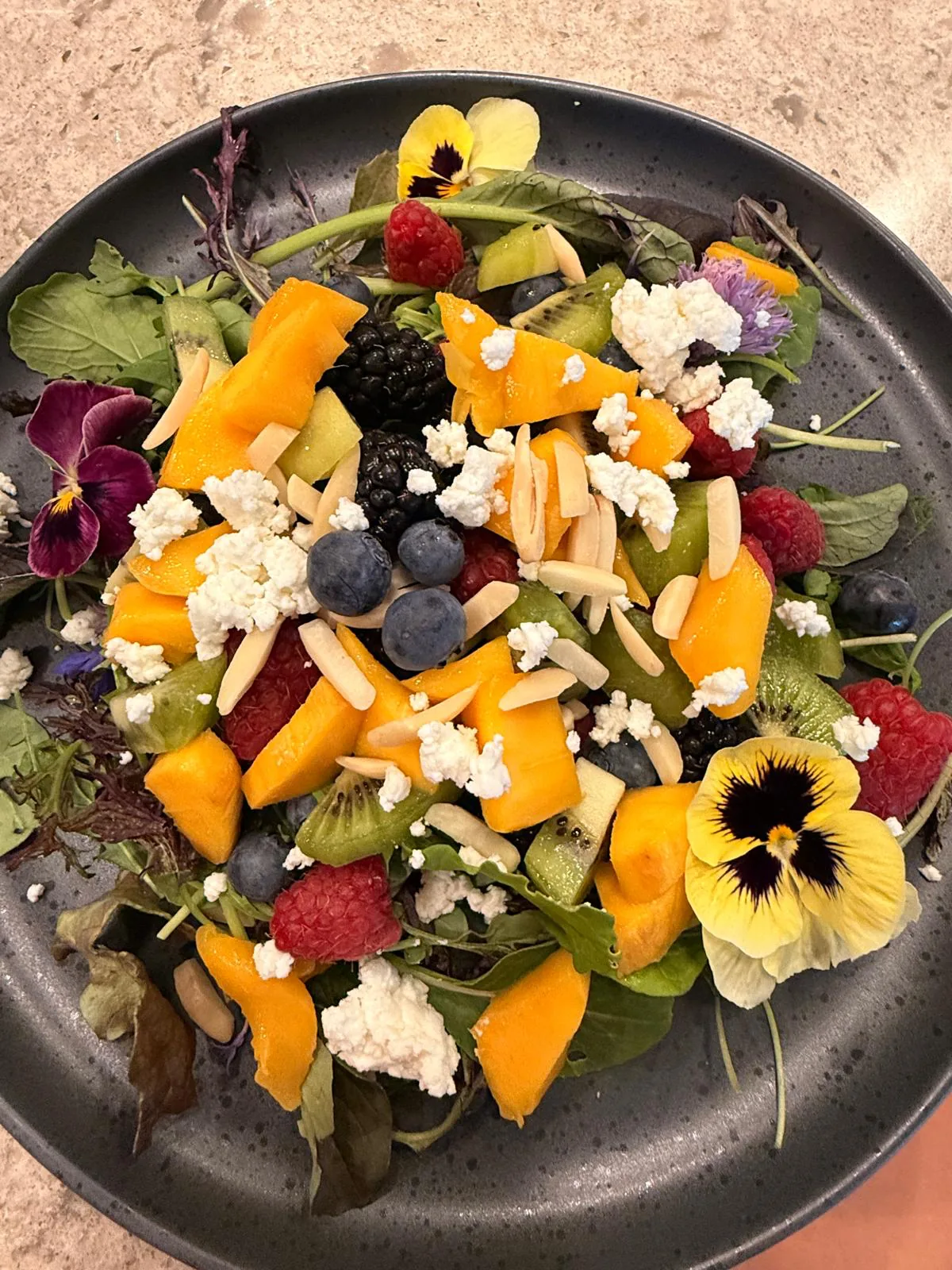
What it looks like in real life
- Two eggs, whatever vegetables are in the fridge fried in olive oil, a slice of good bread
- Rotisserie chicken, a bag of coleslaw dressed properly, a baked potato
- Tinned salmon mashed with yoghurt and lemon, on rye, with a tomato salad
- Lentil soup with a big handful of spinach stirred in, bread and butter
- Leftover chilli over rice with avocado on top
None of these takes skill. Several take under ten minutes.
The one change worth making first
If you change nothing else: put protein in your breakfast. Not instead of what you eat now — alongside it.
It's the change people come back and tell me about. Not because it's magic, but because a breakfast that holds you changes the shape of the whole day.
This is general nutrition education, not medical advice, and it isn't intended to diagnose, treat, cure or prevent any condition. If you're pregnant or breastfeeding, taking medication, or managing a diagnosed condition, talk to your doctor or pharmacist before making changes.
Written by Mellissa Wallace, Registered Holistic Nutritionist, Okanagan BC.
More in Nutrition Basics
- FibreMost Canadians get about half of what's generally recommended. What fibre does, the two types, and how to add it without wrecking your week.7 min
- Meal planning for people who hate meal planningNo colour-coded spreadsheet, no Sunday spent cooking. A loose system for having enough good food in the house without the admin.6 min