
Magnesium is the supplement I'm asked about more than any other, usually for sleep or cramps. Some of that is fair. A lot of what's claimed for it isn't.
What it does
Magnesium is a cofactor in over three hundred enzyme reactions — energy production, protein synthesis, muscle and nerve function, blood glucose control, blood pressure regulation. That breadth is real, and it's also why magnesium gets blamed for and credited with almost everything.
Are people actually short?
Dietary surveys consistently show a good proportion of adults eating below the recommended intake. But frank deficiency — the kind that shows up clinically — is much less common, partly because your kidneys are good at conserving it, and partly because blood tests for magnesium are a poor guide (most of your magnesium is in bone and cells, not blood).
So: eating less than ideal is common, genuine deficiency is not. That's a more honest framing than most supplement marketing offers.
Where it comes from
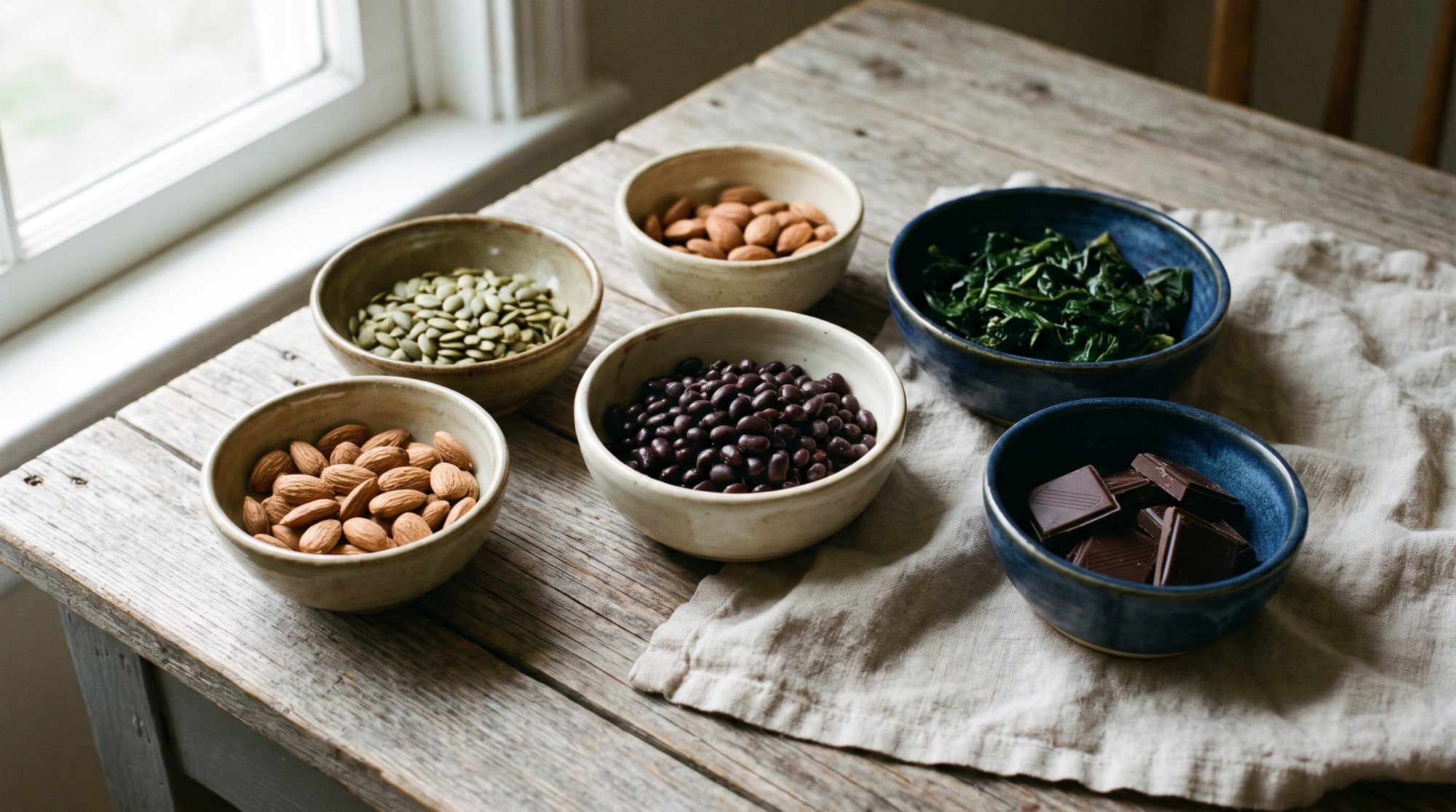
Pumpkin seeds, dark leafy greens, almonds, cashews, black beans, edamame, dark chocolate, avocado, whole grains. It's the centre of the chlorophyll molecule, which is why green plants carry it.
Refining removes most of it — white flour has a fraction of whole wheat's magnesium. That's a large part of why intakes have drifted down.
The forms, since they genuinely differ
| Form | Notes |
|---|---|
| Oxide | Cheapest, poorly absorbed, most likely to cause loose stools. Common in bargain products. |
| Citrate | Better absorbed. Also mildly laxative, which some people want and some don't. |
| Bisglycinate | Well absorbed, gentle on digestion. The one most practitioners reach for. |
| Malate, threonate | Marketed for energy and cognition respectively. Interesting, thinly evidenced, more expensive. |
What the evidence supports, honestly
Constipation: magnesium works, and it's not controversial. Citrate and oxide draw water into the bowel.
Migraine: reasonable evidence for magnesium in prevention for some people. That's a conversation with your doctor.
Sleep: genuinely mixed. Some small trials show modest benefit; the effect is not large or reliable. If you sleep badly, the bigger levers are caffeine timing, morning daylight and a consistent wake time.
Cramps: the evidence is weaker than the reputation, particularly for ordinary night cramps.
Cautions
If you have any kidney impairment, don't supplement magnesium without medical advice — damaged kidneys can't clear the excess. Magnesium can also reduce absorption of some antibiotics and thyroid medication, so spacing them apart matters. Your pharmacist will check this for you free.
This is general nutrition education, not medical advice, and it isn't intended to diagnose, treat, cure or prevent any condition. If you're pregnant or breastfeeding, taking medication, or managing a diagnosed condition, talk to your doctor or pharmacist before making changes.
Written by Mellissa Wallace, Registered Holistic Nutritionist, Okanagan BC.
More in Vitamins & Minerals
- ProteinHow much you actually need, why breakfast is the meal that matters, and whether powders are worth it.6 min
- IronOne of the most common shortfalls in Canada — and the one supplement you should never take on a guess.6 min
- Vitamin B12The one nutrient plants genuinely cannot provide — and the case where a supplement is straightforwardly the right answer.5 min