
Home › Nutrition Library › Food & Health
Food & Health · 7 min readThe nutrition side of sleeping better
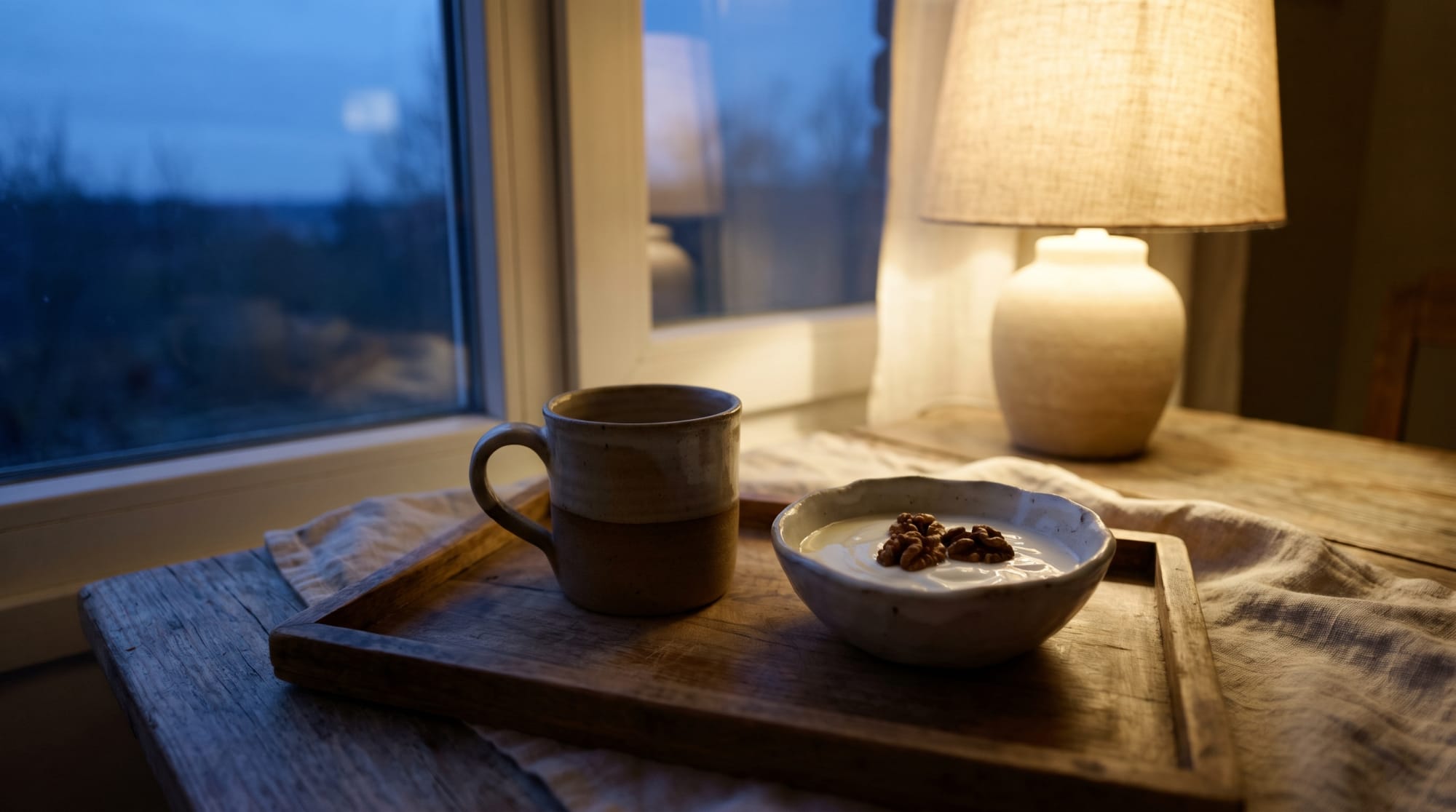
Nutrition isn't the whole sleep story — light, stress and routine matter enormously. But a few food and drink habits do more damage than people realise, and they're among the easier things to change.
Caffeine lasts longer than you think
Caffeine has a half-life of roughly five to six hours in most adults, though it varies a lot. A 3pm coffee is still meaningfully present at 9pm.
Plenty of people who say caffeine doesn't affect their sleep fall asleep fine and then sleep lightly. Falling asleep and sleeping well are different things.
Worth trying: a hard stop eight hours before bed, for two weeks. Taper rather than quitting abruptly if you drink a lot, or you'll have a miserable few days and draw the wrong conclusion.
Alcohol is a sedative, not a sleep aid
A drink helps people fall asleep, which is why the myth persists. As your body clears the alcohol, sleep becomes fragmented in the second half of the night and REM sleep takes a hit — the sleep that leaves you feeling restored. That's why eight hours after a few drinks can feel like none.
Going to bed hungry, or extremely full
A blood sugar dip in the small hours can wake you — sometimes with the heart-racing 3am feeling people find so unsettling. If dinner was early and light, a small balanced snack an hour before bed can genuinely help: yoghurt, oats, cheese and an oatcake, a spoon of nut butter.
At the other end, a very large or fatty meal close to bedtime keeps digestion working while you're trying to wind down, and lying flat makes reflux more likely. Two to three hours between dinner and bed suits most people.
The nutrients that come up
Magnesium is mentioned constantly here. Whether a supplement helps your sleep is genuinely individual and the evidence is mixed — more on that here. Dietary sources are pumpkin seeds, dark leafy greens, beans, nuts and dark chocolate.
Protein through the day matters too, since tryptophan comes from protein foods. Another reason the balanced-plate advice keeps turning up.
The things that aren't food but matter more
- Consistent wake time, seven days a week. More powerful than a consistent bedtime.
- Daylight in the morning, ideally within an hour of waking.
- Dim light in the evening. Not just screens — overhead lighting counts.
- A cool, dark room. Boring and effective.
When it's not a nutrition problem
Loud snoring with pauses in breathing, gasping awake, unrefreshing sleep despite adequate hours, or persistent insomnia over months are medical matters. Sleep apnoea in particular is common, seriously under-diagnosed, and not something to address with diet.
This is general nutrition education, not medical advice, and it isn't intended to diagnose, treat, cure or prevent any condition. If you're pregnant or breastfeeding, taking medication, or managing a diagnosed condition, talk to your doctor or pharmacist before making changes.
Written by Mellissa Wallace, Registered Holistic Nutritionist, Okanagan BC.
More in Food & Health
- Why your energy crashes at 3pmBlood sugar in plain language, and the small changes to breakfast and lunch that flatten out the afternoon without more caffeine.8 min
- How nutrition needs shift through the decadesIron in your twenties and thirties, the perimenopausal years, protein and bone health later on — what actually changes, and what stays the same.8 min
- DigestionHow eating actually works, what tends to go wrong, and where the line is between something to adjust and something to get looked at.7 min