
Home › Nutrition Library › Food & Health
Food & Health · 8 min readHow nutrition needs shift through the decades
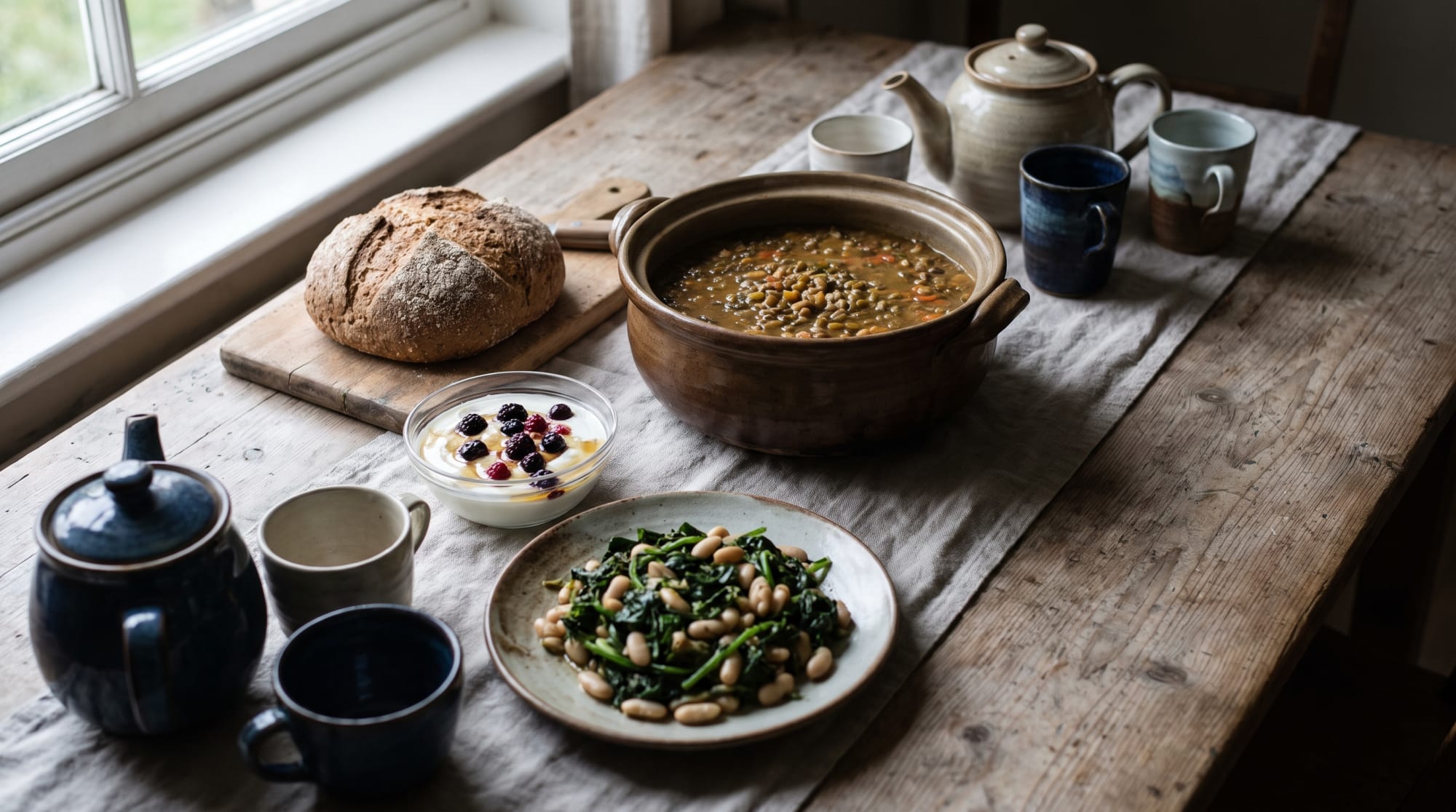
The advice given to women about food has been unusually poor for unusually long. Most of it has been about being smaller. Very little of it has been about what a body actually needs at each stage.
What doesn't change
Enough food, enough protein, plenty of plants, enough fibre. That holds from twenty to eighty. What shifts is the emphasis.
Twenties and thirties
Iron is the one to watch
Menstruating women lose iron monthly, and iron deficiency is one of the most common nutrient shortfalls in Canada. It shows up as fatigue, breathlessness on stairs, cold hands, poor concentration — all easily attributed to being busy.
The full iron guide is here, including why you should never supplement it on a guess.
If pregnancy is on the horizon
Folate matters before conception, not after — the neural tube forms very early, often before a pregnancy is confirmed. This is a conversation for your doctor or midwife.
Forties and the perimenopausal years
This stretch can begin in the late thirties and last several years, and a lot of women are told it's stress and left to get on with it.
Protein needs go up, not down
Maintaining muscle becomes harder with age and with the hormonal changes of this period. Muscle is not a vanity project — it's metabolic health, strength, and how well you'll manage stairs at eighty. Most women I meet are eating well under what would serve them, often because decades of diet culture framed food as something to minimise.
Spread protein through the day rather than loading it all at dinner. And — separate from nutrition, but I'd be failing you not to say it — resistance training matters more than any food at this stage.
Bone health compounds quietly
Bone density declines more rapidly around and after menopause. Calcium, vitamin D, vitamin K and protein all contribute, as does weight-bearing exercise.
Sleep, temperature and appetite
Disrupted sleep affects appetite regulation the next day. That's a physiological effect, not a failure of discipline.
Sixties and beyond
Appetite often declines with age, and this is where under-eating quietly becomes a real risk.
- Protein at every meal matters more, not less.
- B12 absorption declines with age and with certain long-term medications. A simple blood test, worth asking about.
- Thirst signals weaken, so hydration becomes deliberate rather than by feel.
- Fibre still matters, and dehydration plus low fibre is a common, uncomfortable combination.
The thing I most want to say
A great deal of nutrition advice given to women over the last forty years has been about restriction. Eat less. Take up less room.
Almost everything above points the other way — eat enough, eat enough protein, build and keep muscle. If you've spent decades being told the opposite, that reframe takes a while. It's worth it.
None of this replaces medical care. Perimenopause in particular has genuine medical options worth discussing with a doctor who takes it seriously.
This is general nutrition education, not medical advice, and it isn't intended to diagnose, treat, cure or prevent any condition. If you're pregnant or breastfeeding, taking medication, or managing a diagnosed condition, talk to your doctor or pharmacist before making changes.
Written by Mellissa Wallace, Registered Holistic Nutritionist, Okanagan BC.
More in Food & Health
- Why your energy crashes at 3pmBlood sugar in plain language, and the small changes to breakfast and lunch that flatten out the afternoon without more caffeine.8 min
- The nutrition side of sleeping betterCaffeine timing, alcohol, eating too late or too little, and the evening habits that quietly decide how the night goes.7 min
- DigestionHow eating actually works, what tends to go wrong, and where the line is between something to adjust and something to get looked at.7 min