
Home › From the Land › No. 07
Cattail
Called the supermarket of the swamp — and the entry in this atlas that carries the most serious safety warning.
- Region
- Wetlands across Canada
- Season
- Shoots May–June · pollen June–July · rhizome autumn
- Practice
- Forage
- Plant / organism
- Typha latifolia
- Tradition
- Millennia of Indigenous use across North America
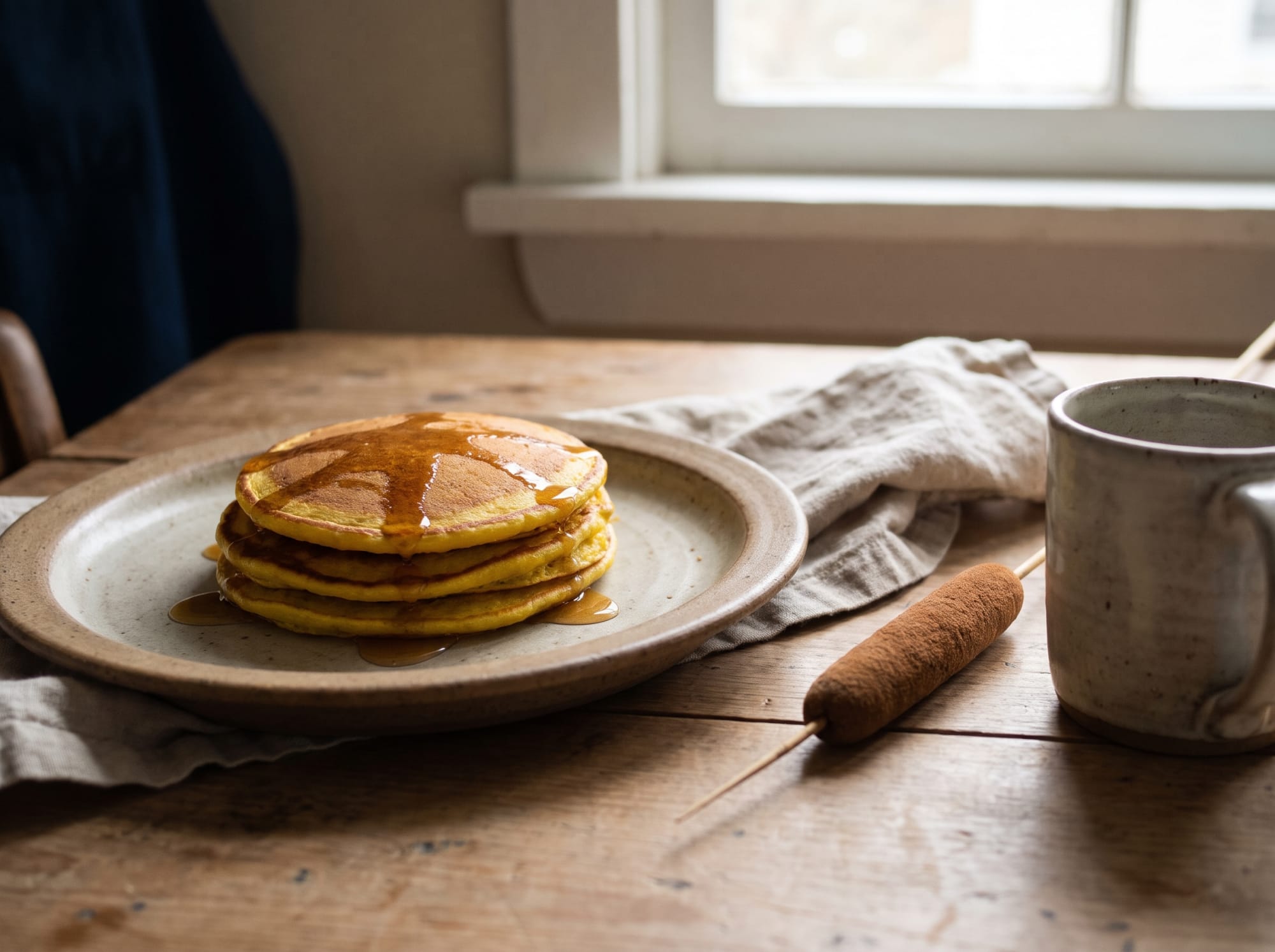
Almost every part of a cattail is edible at some point in the year, which is why it fed people across this continent for thousands of years. It also grows in exactly the kind of water you should think hard about.
Safety
Read every line of this before you pick anything.
1. The lookalike can kill you. Before it flowers, cattail closely resembles Iris pseudacorus (yellow flag iris), which grows in the same wetlands and is toxic. Iris leaves are flat and fan out from a flattened base; cattail leaves are rounder in cross-section and the plant is round at the base. If there is no old flower spike present to confirm identification, do not pick. Sweet flag (Acorus) also grows alongside and is a further complication. When in any doubt at all, walk away.
2. Cattails concentrate what's in the water. They are so effective at taking up heavy metals and agricultural runoff that they are deliberately used in water treatment. Never harvest from ditches, roadside drainage, agricultural runoff, golf courses, storm ponds or industrial land. Only clean, moving water well away from any of that.
3. Pollen is pollen. If you have hay fever or plant allergies, treat cattail pollen with real caution and start with a very small amount.
4. Ask before you harvest. Check local regulations, and do not harvest on Indigenous territory or in parks and protected wetlands without permission.
Make it
Cattail pollen pancakes
8 pancakes · 20 minutes
Ingredients
- ½ cup cattail pollen, sieved
- 1 cup plain or wholemeal flour
- 2 tsp baking powder
- ½ tsp salt
- 1 egg
- 1 cup milk
- 2 tbsp melted butter
- Honey or maple syrup to serve
Instructions
- Collect pollen by bending the flower head into a paper bag and shaking. Sieve out the insects and debris — there will be both.
- Whisk the pollen, flour, baking powder and salt together.
- Beat the egg with the milk and melted butter, then stir into the dry ingredients until just combined. Lumps are fine; overmixing is not.
- Rest the batter 10 minutes.
- Cook in a buttered pan over medium heat until bubbles form and the edges set, then flip. They brown fast because of the pollen, so keep the heat moderate.
- Serve with honey. The colour is extraordinary and the flavour is mild and faintly sweet.
Nutrition notes
Cattail is really four different foods depending on the month.
Spring shoots (May–June)
The inner core of young shoots — sometimes called Cossack asparagus — is crisp, mild and cucumber-like. Mostly water and fibre, with some vitamin C. Eaten raw or lightly cooked.
Green flower heads (June)
Before the pollen forms, the immature flower spike can be boiled and eaten rather like corn on the cob. Modest nutritionally, good eating.
Pollen (late June–July)
This is the nutritionally interesting one. Cattail pollen is roughly 15–20% protein and can be shaken directly into a bag in remarkable quantity. Traditionally mixed with flour for pancakes and breads. It's bright yellow and gives everything a golden colour.
Rhizome starch (autumn–winter)
The underground stems are dense with starch. Extraction is real work: crush the rhizome in water, let the starch settle, pour off the fibre, repeat, dry the residue. The result is essentially a flour. High in carbohydrate, low in most else.
Which is the honest nutritional summary: cattail is calories and fibre rather than a nutrient powerhouse. Its importance was as a reliable staple, not as a superfood. Anyone selling it to you as the latter is overreaching.
Where a supplement might come in
There's no supplement equivalent here and there shouldn't be. Cattail is a starch staple, not a concentrated source of anything worth extracting.
I've included it because it makes a point I care about: for most of human history, "wild food" meant reliable calories from plants nobody planted. The modern habit of treating wild foods as concentrated medicine is a fairly recent invention, and often a marketing one.
Where it comes from
Cattail has been a staple food across North America for a very long time, used by many Indigenous nations in ways that varied by region and season. The rhizomes were processed for starch, the young shoots eaten as a vegetable, the pollen collected and used like flour, and the leaves and down used for weaving, bedding and insulation.
This is not a foraging curiosity or a survival-manual novelty. It was a calorie staple — a wetland stand of cattail can produce more starch per hectare than a field of potatoes.
I want to name clearly that this knowledge belongs to the peoples who developed it. If you live in BC and want to learn this properly, the best route is not a website — it's local Indigenous-led plant walks and knowledge holders, where such teaching is offered.
Nutrients noted for this entry: Starch-rich rhizome · protein-rich pollen · vitamin C in shoots.
Please read
This is general food and nutrition education, not medical advice. Nothing here is intended to diagnose, treat, cure or prevent any disease or condition. If you are pregnant or breastfeeding, taking any medication, or managing a diagnosed condition, speak with your doctor or pharmacist before making changes.
Written by Mellissa Wallace, Registered Holistic Nutritionist, Okanagan BC.
More from the land
Keep reading
Northern Europe · BC
Rosa canina
No. 05