
Home › From the Land › No. 03
Masala Chai
Boiled, not steeped — which is the part almost every Western recipe gets wrong.
- Region
- India
- Season
- Year round
- Practice
- Infuse
- Plant / organism
- Camellia sinensis + spices
- Tradition
- Spice use ancient; tea version c.1900s
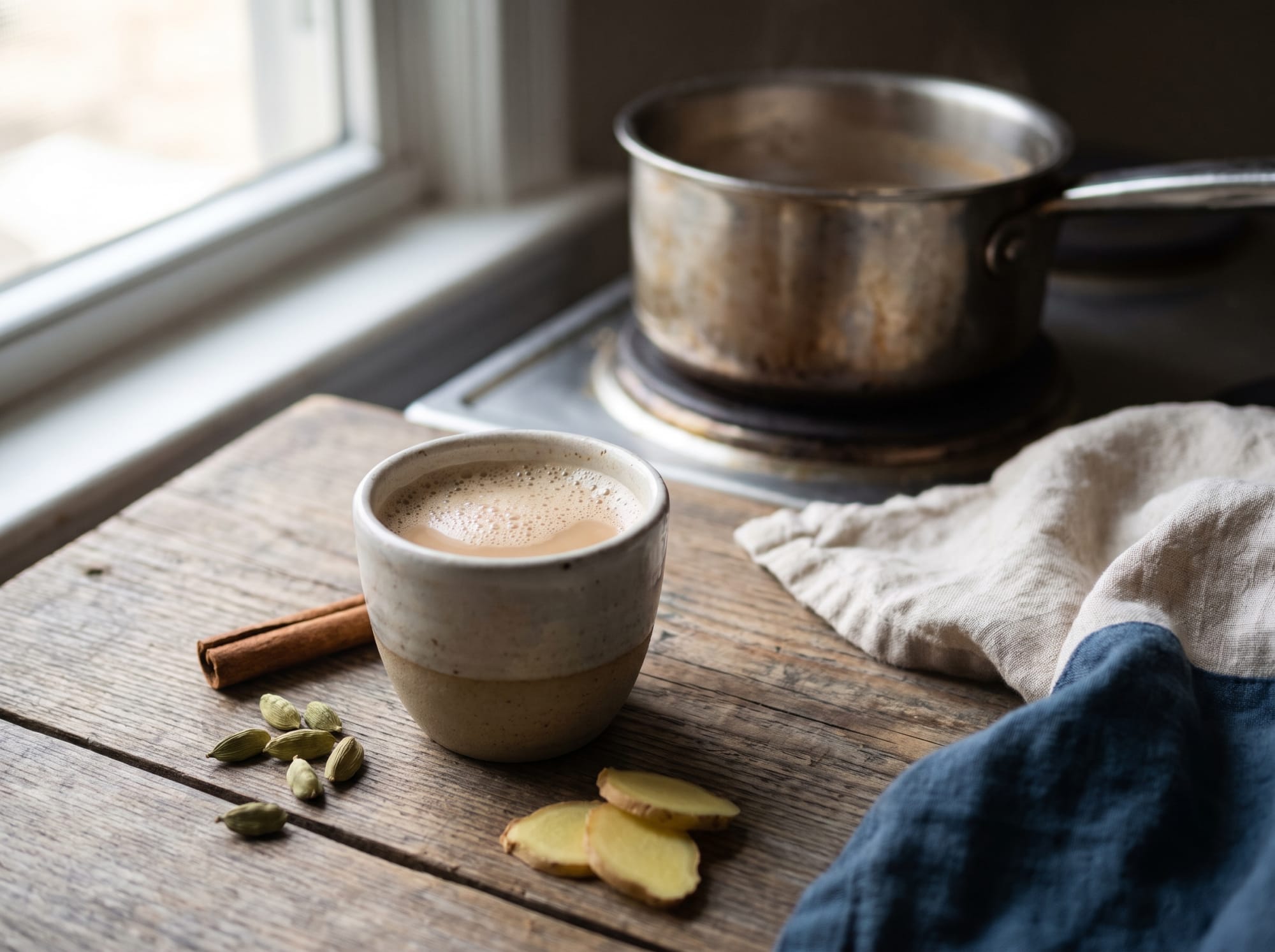
The drink most of the world calls chai is a twentieth-century invention built on a much older spice tradition, and it exists partly because of a marketing campaign that backfired beautifully.
Safety
Cassia cinnamon in large daily doses contains coumarin, which can affect the liver. Culinary amounts are not a concern; concentrated supplements are a different matter.
Make it
Proper stovetop masala chai
2 cups · 12 minutes
Ingredients
- 1 cup water
- 1 cup whole milk
- 2 tsp strong black tea (Assam broken leaf is ideal)
- 4 green cardamom pods, cracked
- 2cm fresh ginger, sliced thin
- 1 small cinnamon stick
- 2 cloves
- 2 black peppercorns
- Sugar or jaggery to taste — start with 1 tsp
Instructions
- Crush the cardamom, cloves and peppercorns roughly in a mortar. You want them cracked open, not powdered.
- Put the water, all the spices and the ginger in a small pan. Bring to the boil and let it go 3–4 minutes so the spices actually give something up.
- Add the tea leaves. Boil hard 2 minutes. This is not steeping — it should look far too strong.
- Add the milk and the sugar. Bring back to the boil, then lower the heat and let it rise and fall 2–3 times, pulling the pan off as it climbs the sides.
- Strain into cups from a height, which aerates it and is half the pleasure.
Nutrition notes
The tea. Black tea carries caffeine and polyphenols, principally theaflavins and thearubigins formed during oxidation. Regular tea drinking is associated with modest cardiovascular benefits in large population studies, though those studies can't easily separate tea from everything else about people who drink tea.
The milk changes things. Milk proteins bind some tea polyphenols, and there's a long-running argument about whether this reduces their absorption. The honest answer is that it's unresolved and the effect is probably small.
The spices. Ginger has the best evidence of the group — reasonably good data for nausea, including in pregnancy and after surgery. Cardamom, cinnamon and pepper have interesting laboratory findings and much thinner human evidence. Black pepper contains piperine, which genuinely does increase absorption of some compounds, most famously curcumin.
The sugar. Traditional street chai is properly sweet — often two teaspoons a cup. That's fine occasionally and adds up quickly at five cups a day. This is the part of the drink I'd actually pay attention to.
And note the caffeine: chai made properly with a strong boil extracts more than a gentle steep. If you're drinking it after four in the afternoon, that's worth knowing.
Where a supplement might come in
You can buy ginger capsules, cardamom extract, and cinnamon supplements. For general everyday use, drinking the spices in a hot drink you look forward to is a better plan than swallowing them — you'll actually keep doing it.
The one real exception in this group is ginger for nausea, particularly in pregnancy, where standardised doses have been studied properly. That is a conversation for your doctor or midwife rather than something to work out from a website — including this one.
Cinnamon supplements are marketed heavily for blood sugar. The human trials are genuinely mixed, the doses used are far higher than culinary amounts, and high-dose cassia cinnamon carries a coumarin concern for the liver. If blood sugar is your reason for being here, that belongs with your physician.
Where it comes from
Spiced preparations of ginger, cardamom, pepper and cinnamon go back a very long way in the Indian subcontinent, in both cooking and Ayurvedic practice. Tea, oddly, does not.
Tea drinking was pushed in India by the British-run Indian Tea Association in the early 1900s, to create a domestic market for tea grown in Assam for export. Vendors were supplied and instructed to serve it the English way — leaves, hot water, a little milk.
They ignored this almost entirely. Independent chai wallahs stretched the expensive tea by boiling it hard with a lot of milk, plenty of sugar, and the spices already in the kitchen. The Association objected. The vendors carried on. The result is one of the most-consumed drinks on earth.
There is no single recipe. Ginger dominates in the north, more cardamom in Gujarat, black pepper in the winter, and every family thinks their proportions are correct.
Nutrients noted for this entry: Polyphenols · caffeine · spice volatiles.
Please read
This is general food and nutrition education, not medical advice. Nothing here is intended to diagnose, treat, cure or prevent any disease or condition. If you are pregnant or breastfeeding, taking any medication, or managing a diagnosed condition, speak with your doctor or pharmacist before making changes.
Written by Mellissa Wallace, Registered Holistic Nutritionist, Okanagan BC.
More from the land
Keep reading
Europe · naturalised across Canada
Verbascum thapsus
No. 06