
Home › From the Land › No. 02
Snow Fungus & Pear
A translucent, almost weightless mushroom, simmered with pear into something between a soup and a dessert.
- Region
- China
- Season
- Dry winter months
- Practice
- Simmer
- Plant / organism
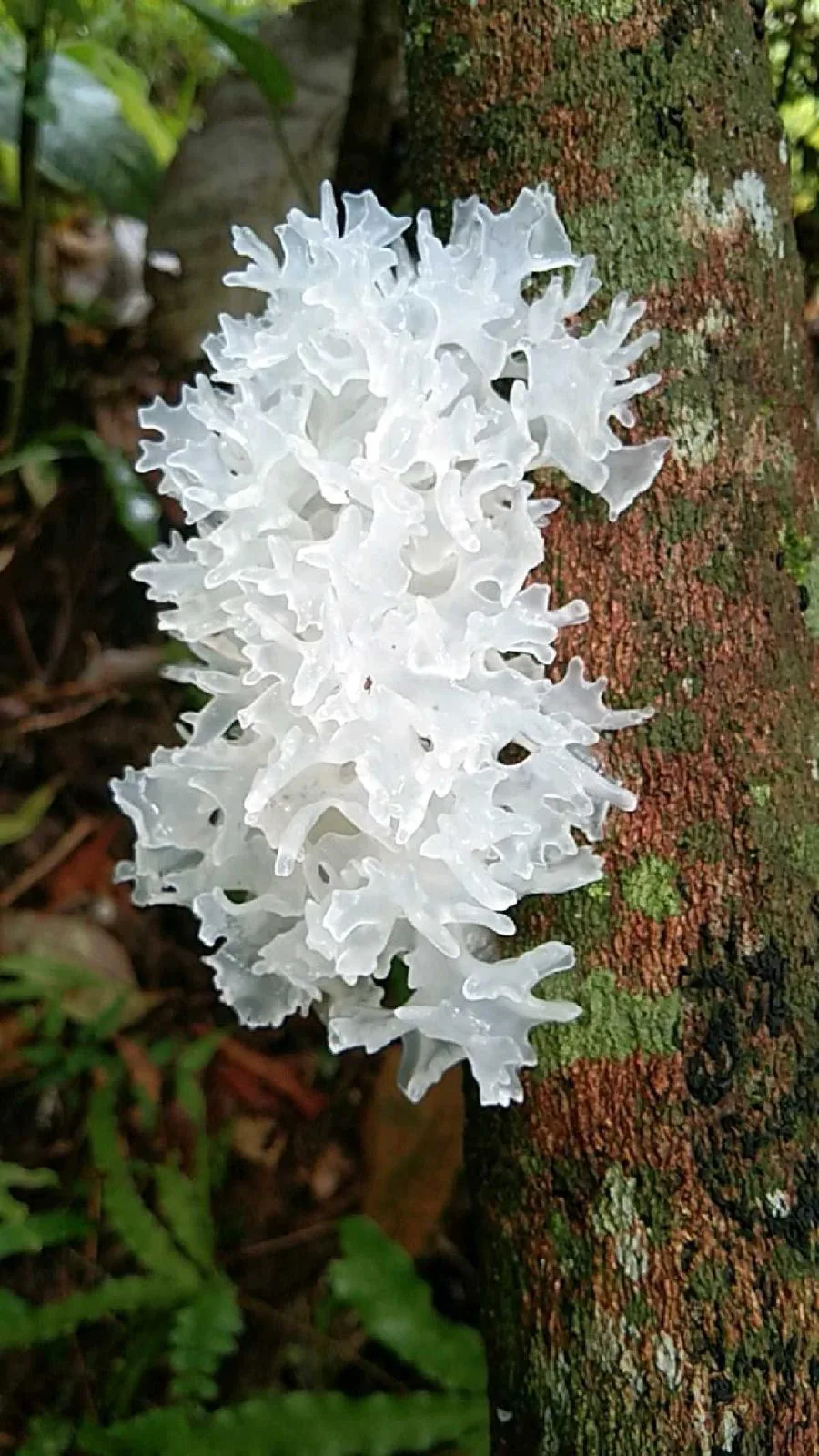
- Tremella fuciformis
- Tradition
- Tang dynasty onward
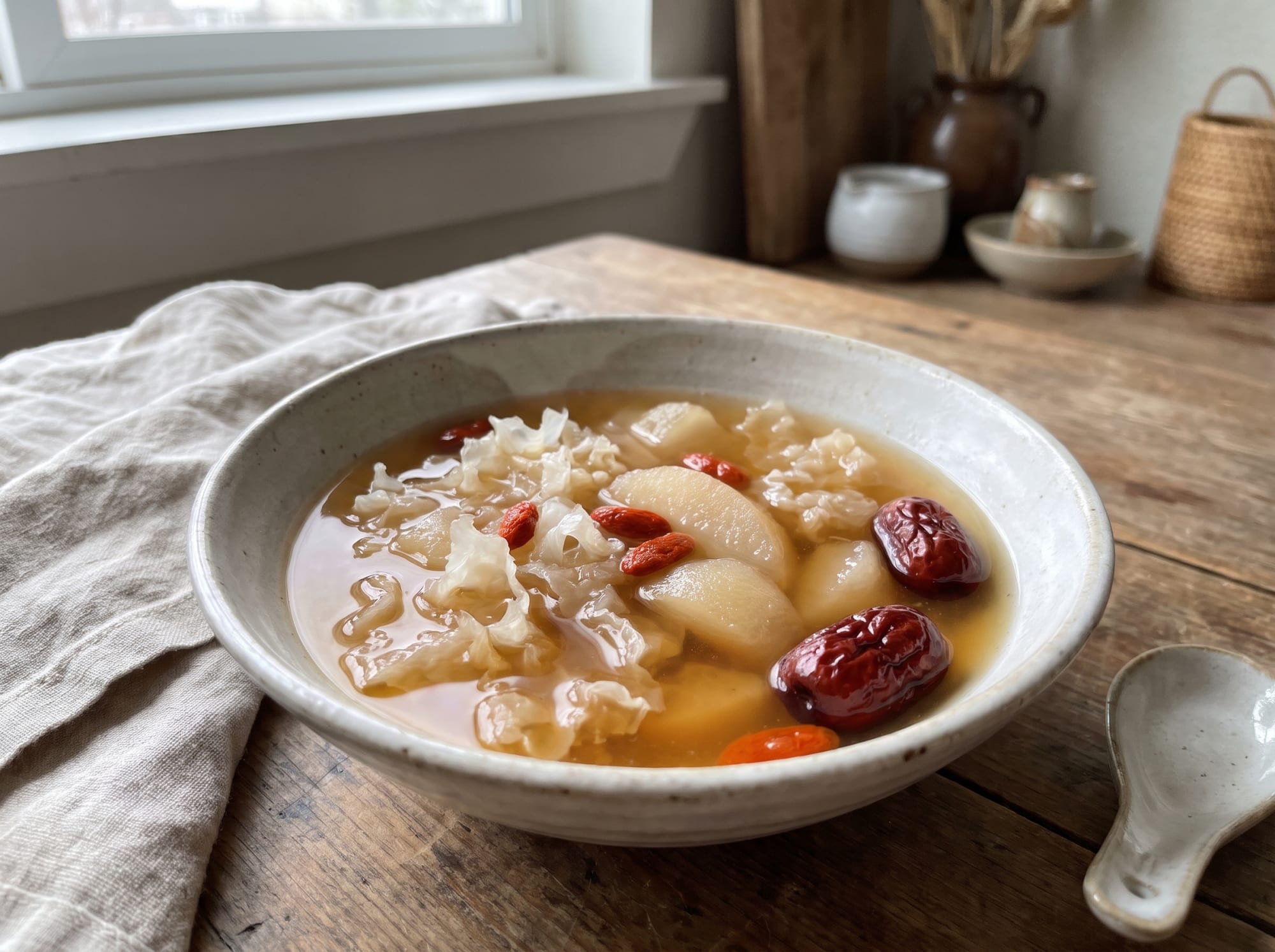
Snow fungus looks like a chrysanthemum made of glass and tastes of very little. Its entire purpose is texture — and, in Chinese food tradition, moisture.
Make it
Snow fungus, pear and goji
Serves 4 · 20 min active · 1 hour simmering
Ingredients
- 1 dried snow fungus (about 15g)
- 2 Asian pears, or 2 firm regular pears
- 2 tbsp goji berries
- 6 dried jujubes (red dates), optional
- 20g rock sugar, or honey to taste at the end
- 1.5 L water
Instructions
- Soak the snow fungus in cold water 1–2 hours until it swells into a full flower shape. It expands enormously — use a large bowl.
- Cut away the hard yellowish base and discard. Tear the rest into bite-sized florets.
- Bring the water to the boil, add the fungus, reduce to a bare simmer and cook 45 minutes, partly covered.
- Peel and chop the pears. Add them with the jujubes and rock sugar. Simmer another 20 minutes.
- Add the goji berries in the last 5 minutes — any longer and they go mushy.
- The broth should have thickened slightly and turned faintly silky. Serve warm, or chill and serve cold in summer.
Nutrition notes
Snow fungus is roughly 70% carbohydrate by dry weight, and most of that is a polysaccharide that behaves like soluble fibre. That's what produces the characteristic slippery, gelatinous texture — it's holding water.
Which makes the traditional framing rather sensible on its own terms. A food that traps water in the gut and adds soluble fibre is a reasonable thing to eat when things feel dry and sluggish, whatever vocabulary you use to describe it.
You'll find enthusiastic claims online about Tremella polysaccharides and immune function or skin hydration. The laboratory work is real and interesting; the human evidence is thin. Some cosmetic research on tremella extract as a skin humectant looks promising. Eating a bowl of soup is not the same intervention as applying a concentrated extract, and I'd be cautious about anyone selling you the two as equivalent.
What it definitely is: nearly calorie-free, high in soluble fibre, and a pleasant way to eat more fruit in winter.
Where a supplement might come in
Tremella extract capsules exist and are sold for skin and immune support. I don't use them, for a straightforward reason: the human evidence doesn't yet justify the price, and the whole food costs about two dollars.
If skin dryness is what's driving your interest, the boring answers matter far more — total fluid intake, enough dietary fat, and whether the air in your house is bone dry all winter. Those are free.
Where it comes from
In Chinese dietary thinking, foods carry qualities beyond their nutrients: warming, cooling, drying, moistening. Winter — with its cold winds and heated indoor air — is considered a drying season, and dry throats, dry coughs and dry skin are what people cook against.
Yin er geng, snow fungus soup, is one of the classic answers. Historically it was a luxury: wild Tremella was rare enough to be tribute food for the imperial court, and it stayed expensive until cultivation methods were worked out in the 1960s. Now it costs very little, which is one of the happier outcomes in food history.
It's traditionally simmered with rock sugar, goji berries, dried longan or jujube, and often Asian pear. Served warm in winter, chilled in summer.
Nutrients noted for this entry: Soluble polysaccharides · negligible calories.
Please read
This is general food and nutrition education, not medical advice. Nothing here is intended to diagnose, treat, cure or prevent any disease or condition. If you are pregnant or breastfeeding, taking any medication, or managing a diagnosed condition, speak with your doctor or pharmacist before making changes.
Written by Mellissa Wallace, Registered Holistic Nutritionist, Okanagan BC.
More from the land
Keep reading
Morocco
حريرة
No. 04