
Blood sugar has become a wellness industry unto itself, complete with monitors for people who don't need them. The underlying idea is sound; most of what's sold around it isn't.
The basics
When you eat carbohydrate, it's broken down to glucose and absorbed into the blood. Insulin moves that glucose into cells. Ideally the whole thing looks like gentle hills rather than spikes and crashes.
What produces the rollercoaster isn't carbohydrate itself — it's carbohydrate arriving fast and alone. A bread roll on its own and a bread roll alongside eggs and salad behave completely differently in your body.
What flattens the curve
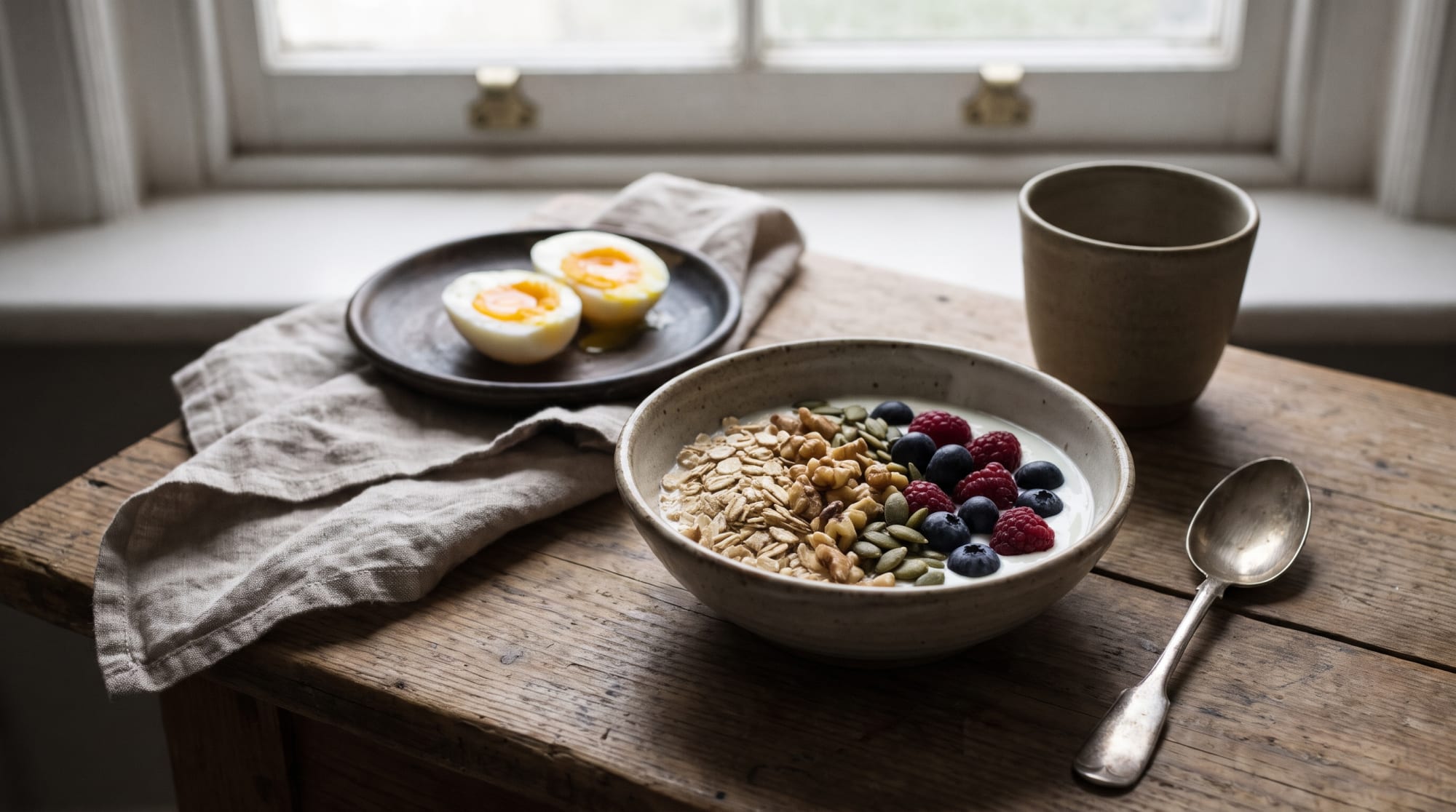
- Protein at every meal, and especially at breakfast. This is the single highest-leverage change for most people.
- Fibre with the carbohydrate. It physically slows the rate at which glucose reaches the bloodstream.
- Fat alongside slows stomach emptying.
- Walking after eating. Ten minutes. Working muscles take up glucose directly.
- Order of eating. Some evidence suggests eating vegetables and protein before the starch in a meal blunts the rise. Small effect, costs nothing.
Notice that none of those involve removing anything. That's deliberate.
What I'd be sceptical about
Continuous glucose monitors for people without diabetes. They're sold as insight and often deliver anxiety. Glucose fluctuates in healthy people — that's normal function, not a warning. Watching a number rise after a banana tends to produce fear of bananas rather than better eating.
"Blood sugar balancing" supplements. Berberine, cinnamon, chromium and others are marketed hard here. The human evidence is mixed to weak, doses used in studies are far above culinary amounts, and some — berberine especially — have real medication interactions. If blood sugar is a genuine medical concern for you, that belongs with your physician.
Persistent unusual thirst, needing to urinate frequently, unexplained weight loss, blurred vision or unusual fatigue need medical assessment, not a nutrition adjustment. Diabetes and prediabetes are diagnosed with a blood test and managed medically. Nutrition works alongside that care — never instead of it — and if you take any diabetes medication, do not change how you eat substantially without telling the person who prescribed it.
The realistic version
For most people who feel like they're on a blood sugar rollercoaster, the fix is not exotic. Put protein in breakfast. Don't eat carbohydrate on its own. Eat enough at lunch. Walk after dinner. Give it two weeks before changing anything else, so you can tell what actually worked. There's more on the afternoon crash here.
This is general nutrition education, not medical advice, and it isn't intended to diagnose, treat, cure or prevent any condition. If you're pregnant or breastfeeding, taking medication, or managing a diagnosed condition, talk to your doctor or pharmacist before making changes.
Written by Mellissa Wallace, Registered Holistic Nutritionist, Okanagan BC.
More in Food & Health
- Why your energy crashes at 3pmBlood sugar in plain language, and the small changes to breakfast and lunch that flatten out the afternoon without more caffeine.8 min
- The nutrition side of sleeping betterCaffeine timing, alcohol, eating too late or too little, and the evening habits that quietly decide how the night goes.7 min
- How nutrition needs shift through the decadesIron in your twenties and thirties, the perimenopausal years, protein and bone health later on — what actually changes, and what stays the same.8 min