
Home › From the Land › No. 04
Harira
The soup that breaks the fast — lentils, chickpeas, tomato and enough herbs to turn it green.
- Region
- Morocco
- Season
- Ramadan and winter
- Practice
- Simmer
- Plant / organism
- Lens culinaris · Cicer arietinum
- Tradition
- Documented since the 13th century
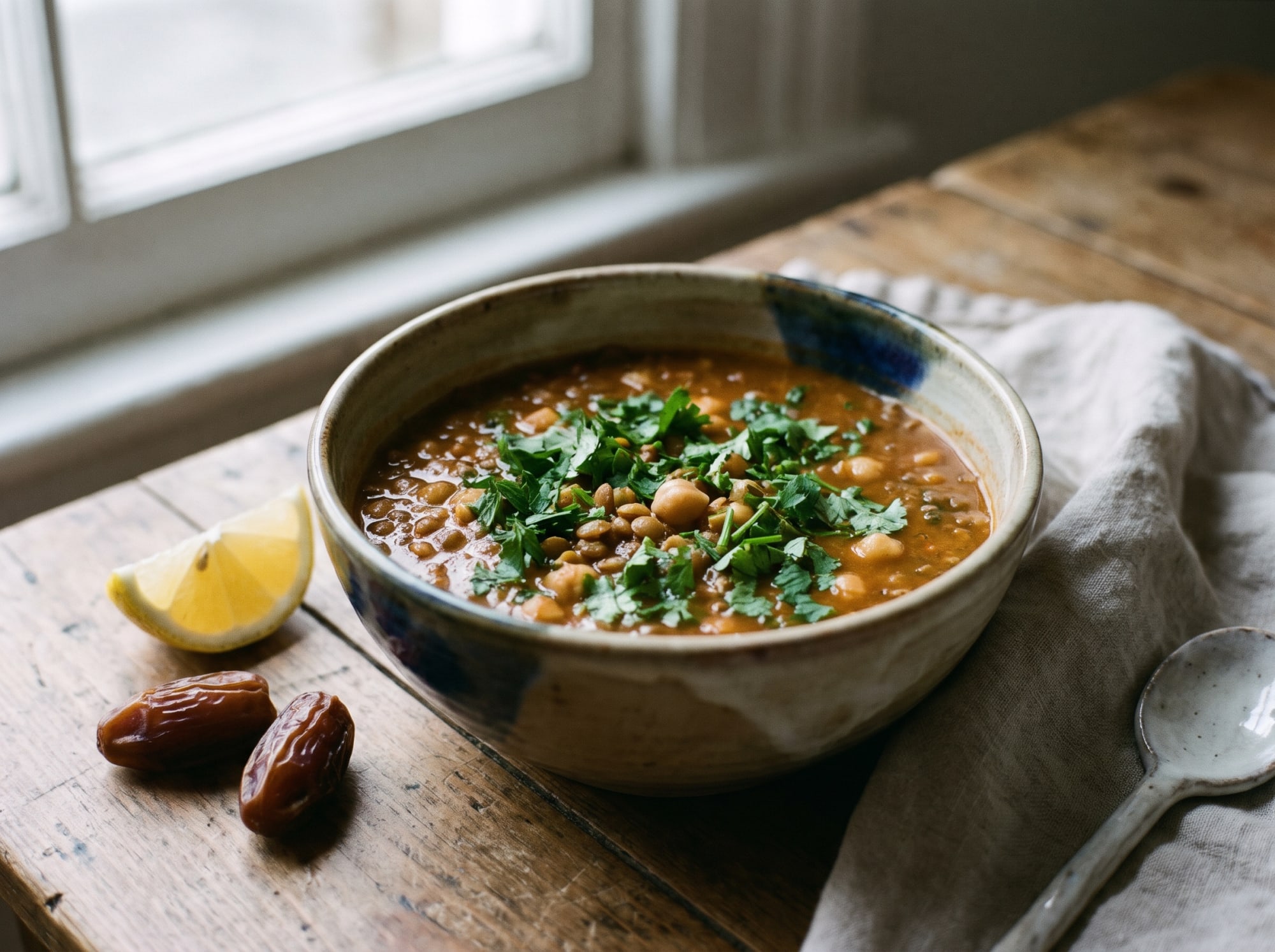
If I had to nominate one bowl as the most nutritionally complete traditional dish I know, it would probably be this one. It also happens to be cheap and freeze beautifully.
Make it
Harira
Serves 6 · 30 min active · 1 hour total
Ingredients
- 150g brown or green lentils, rinsed
- 1 tin (400g) chickpeas, drained — or 150g dried, soaked overnight
- 1 large onion, finely chopped
- 3 celery sticks with leaves, chopped
- 1 tin (400g) chopped tomatoes
- 2 tbsp tomato purée
- 1 large bunch flat-leaf parsley
- 1 large bunch coriander
- 1 tsp ground ginger, 1 tsp turmeric, 1 tsp cinnamon, plenty of black pepper
- A pinch of saffron, if you have it
- 2 tbsp olive oil
- 2 L water or stock
- 2 tbsp flour slaked in 150ml cold water (optional, to thicken)
- Lemon wedges and dates, to serve
Instructions
- Soften the onion and celery in the olive oil over medium heat, 8 minutes, without colouring.
- Add all the spices and stir for a minute until the kitchen smells like the recipe is working.
- Add the tomatoes, tomato purée, lentils and water. Bring to the boil, then simmer 35 minutes until the lentils are properly soft.
- Add the chickpeas and half the herbs, finely chopped. Simmer 10 minutes more.
- If you want it thicker, pour the flour slurry in slowly while stirring, and cook 5 minutes to lose the raw taste. Skip this and it's still a very good soup.
- Off the heat, stir through the rest of the herbs. Serve with a lemon wedge and, if you're doing it properly, a date on the side.
Nutrition notes
Look at what's in the bowl.
- Lentils and chickpeas — plant protein, and a lot of soluble fibre. Legumes have one of the lowest glycaemic responses of any carbohydrate source, which matters a great deal in a meal designed to be eaten after a long fast.
- Tomato — cooked tomato makes lycopene considerably more available than raw, and the vitamin C helps you absorb the non-heme iron from the legumes. This pairing is not an accident anyone planned; it's just what worked.
- Fresh herbs in quantity — parsley and coriander go in by the bunch, not the sprig. That's a real contribution of vitamin K, folate and carotenoids.
- Lemon at the table — more vitamin C, right at the point of eating, which again helps the iron.
The combination of legumes plus a grain or bread also covers the amino acid profile well, which is the mechanism behind the "complementary proteins" idea. That idea used to be taught as something you had to do at every meal; we now know it's fine across the day. Harira does it in one bowl anyway.
The one caveat: legumes give some people wind, particularly if beans are rare in your diet. That usually settles over a few weeks as your gut bacteria adapt. Soaking and thorough cooking help, as does building up gradually rather than all at once.
Where a supplement might come in
Two supplements come up around a meal like this, and they point in opposite directions.
Iron. Legumes contain iron, but the non-heme form is absorbed far less efficiently than iron from meat. The vitamin C in the tomato and lemon genuinely helps. If you eat mostly plants and you're menstruating, iron is worth knowing your numbers on — via a blood test from your doctor. Never supplement iron on a guess; too much is harmful and the symptoms of low iron overlap with a dozen other things.
B12. If a bowl like this is what most of your meals look like — that is, if you eat little or no animal food — B12 is the one nutrient that genuinely isn't available from plants in a reliable form. This is a real gap and a real reason to supplement. It's also cheap and well-studied. Speak to your doctor about testing and dose.
Where it comes from
Harira is what Moroccan households eat at sunset during Ramadan, after a day without food or water — traditionally alongside dates and milk. That context shaped the recipe. It needed to rehydrate, restore blood sugar gently rather than violently, and be genuinely nourishing after a long fast.
It's eaten far beyond Ramadan — it's a winter staple, a wedding soup, and a street food — but the fast-breaking role is why it's built the way it is.
Regional versions vary enormously. Some are thickened with tadouira, a flour-and-water slurry stirred in at the end; some use fermented sourdough starter for the same job and a faint sourness. Fez versions lean tomato-heavy; Marrakech versions often carry more lamb.
Nutrients noted for this entry: Plant protein · soluble fibre · iron · folate.
Please read
This is general food and nutrition education, not medical advice. Nothing here is intended to diagnose, treat, cure or prevent any disease or condition. If you are pregnant or breastfeeding, taking any medication, or managing a diagnosed condition, speak with your doctor or pharmacist before making changes.
Written by Mellissa Wallace, Registered Holistic Nutritionist, Okanagan BC.
More from the land
Keep reading
China
銀耳
No. 02